
What was the original ElfQuest RPG like for fans in 1984?
For 1980s roleplayers who loved both high-fantasy comics and Dungeons & Dragons, the ElfQuest RPG was the ultimate pop-culture fusion. It was a historic collision—like the iconic Uncanny X-Men and The New Teen Titans crossover that rocked comic book shops in 1982, or the legendary first time you bit into a Reese’s Peanut Butter Cup and realized milk chocolate and peanut butter were meant for each other.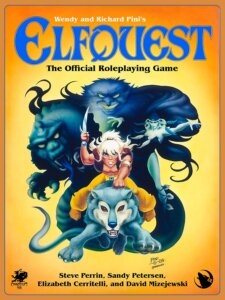
Before the release of the ElfQuest RPG, D&D players who were also fans of Wendy and Richard Pini’s work had to jury-rig their own homebrew campaigns to explore the World of Two Moons. They had to adapt standard D&D rules and shoehorn elven sub-races into a system not designed to capture the primal nature and telepathic bond of the Wolfriders. I should know because I was there; my first ever basic D&D character was an elf named Skywise.
When Chaosium released the official ElfQuest RPG box set in 1984, it bridged that gap entirely. It changed the landscape of alternative fantasy gaming by fusing together two popular phenomena into a single experience. It wasn’t just a new rulebook; it was a validation of an entire fandom, translating the exquisite art and emotional depth of the comic books into a living, breathing interactive world.
How can modern gamers understand the historical impact of the ElfQuest RPG?
For younger roleplayers trying to grasp why the ElfQuest RPG was so monumental, the best comparison is modern multimedia fandom hits like Wizards of the Coast’s Stranger Things, Welcome to the Hellfire Club, and Rick & Morty D&D box/starter sets. When those modern box sets dropped, fans went completely bananas because they combined an obsession with specific fandoms directly with the mechanics of their favorite tabletop hobby.
Back in 1984, that exact same high-octane excitement hit the comic book community. The ElfQuest RPG wasn’t just a generic fantasy game with an elf slapped on the cover; it was a momentous, top-tier property colliding with a major game publisher at the absolute height of its popularity.
If you know the absolute thrill of opening a modern, specialized pop-culture ruleset like Welcome to the Hellfire Club, that is exactly the lightning-in-a-bottle feeling Chaosium delivered to fans four decades ago. It proved that comic book fandom and serious roleplaying belonged under the same roof.
Why does the ElfQuest RPG reissue feel so meaningful to original fans?
The reissue acts as a direct time machine for veteran gamers, offering a chance to reclaim a legendary piece of roleplaying history that may have been lost to time. Decades after its initial run, the deep sensory memory of cracking open that pristine box set, turning the lavishly illustrated pages, and rolling dice to create and play a Wolfrider still sends a thrill down the spine.
This rerelease triggers a powerful wave of tactile nostalgia for OG fans. Many original copies have been lost to the decades—worn down by spilled sodas, creased by endless character creation sessions at the kitchen table, or sold off in yard sales during the dark ages of physical media. Tabletop gaming in the 1980s was an 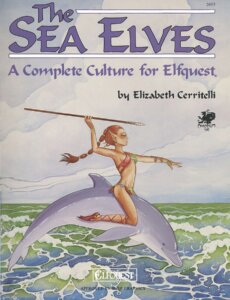 intensely social, physical act, and those cardboard boxes bore the battle scars of our youth.
Luckily, enough of the original ElfQuest RPG material made it through relatively unscathed and fans, old and new, are still playing the game. For gamers who would rather feel the joy of owning and playing the OG gaming material, Noble Knight Games carries some of the original RPG material, including first and second editions of the complete box set; a complete first edition ruleset (minus the box); books such as the ElfQuest Companion, The Sea Elves and the Elf War supplements are also still available in all their OG glory. And for players who like to add a bit of 3D into their gaming, some of the original Ral Partha ElfQuest figurines can still be found.
Gamers who have not read ElfQuest but who are interested in the story can also catch up by reading the various comic books and graphic novels.
This beautifully produced anniversary edition gives veteran players a premium, definitive way to hold their childhood magic in their hands once again. It respects the legacy of the original print run while ensuring that a masterpiece of RPG design is preserved for the long haul. For new players, it’s a chance to discover one of the great, literary fantasy settings through roleplaying.
How much has the World of Two Moons expanded since the original game came out?
To put the scale of this setting into perspective for modern players, the evolution of ElfQuest is incredibly similar to the massive journey of World of Warcraft growing from its basic “Vanilla” launch through decades of massive expansions and its latest Midnight story arc.
When the original ElfQuest RPG was published in 1984, the lore was beautifully tight, focusing entirely on the legendary 20-issue run of The Original Quest that had just reached its grand conclusion.
Today, the lore of the franchise has exploded into an interconnected mega-universe that stretches across subsequent classic sequels, like Siege at Blue Mountain and Kings of the Broken Wheel, all the way to The Final Quest. The lore has grown by thousands of years, introducing completely new sub-races, planetary histories, cosmic secrets, and sweeping tribal alliances that old-school players could only dream of back then.
The brilliant part of this expansion is that while the new Chaosium box set focuses perfectly on that classic, nostalgic era of the setting, the vast library of modern comic books gives Game Masters an endless reservoir of new canon to pull from. Whether you want to limit your campaign to the primeval forests of the original series or use more recent graphic novels to homebrew a campaign spanning millennia, the depth of the world today is staggering.
What makes discovering the ElfQuest RPG so thrilling for modern players?
Modern tabletop players get to experience the raw, visceral thrill of discovering a dark, primal world where telepathic “Sending” replaces traditional high-fantasy 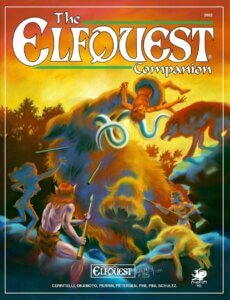 magic. For a generation raised entirely on modern d20 systems and high-magic superhero tropes, stepping into the shoes of Cutter and his Wolfriders for the very first time is going to be a complete revelation.
In a gaming landscape often filled with generic, Tolkienesque elves who live in pristine stone towers, ElfQuest offers something completely unique: a gritty, fierce, and emotionally sophisticated setting where survival demands absolute tribal loyalty. These elves aren’t immortal gods looking down on the world; they are a small, tight-knit pack of survivors hunting for their place on a hostile, prehistoric planet ruled by superstitious humans.
Veterans can easily envy today’s roleplayers; while the memory of discovering this world decades ago is a treasure, it cannot compete with the unmatched excitement of exploring its deep lore, its complex tribal structures, and its uniquely lethal combat for the very first time.
How similar is the Chaosium rerelease to the 1984 original game?
The new ElfQuest Classic: 40th Anniversary Deluxe Edition keeps the exact mechanical soul of the 1984 original while wrapping it in a much sturdier, deeply remastered, premium two-inch boxed set. Chaosium has wisely avoided rewriting the rules into a modern clone, ensuring that the lethal, intuitive, and deeply beloved basic roleplaying d100 engine remains intact.
This means the game still relies on the realistic, skill-based percentile system that made Chaosium famous. As a fan still playing Middle-Earth using the Rolemaster ruleset, the d100 system holds a special place in my heart, as it does many other gamers. Instead of escalating hit points that turn characters into unkillable sponges, combat remains fast and dangerous, perfectly mirroring the high stakes of the comic series.
However, Chaosium’s “Nostalgia Department” has massively upgraded the value of the physical presentation. The layout mirrors the original style but boasts incredibly vibrant, digitally restored colors and a much more durable box. It also includes an official “What’s in the Box” sheet and a brilliant page titled “Simplifying ElfQuest Combat”—giving Game Masters the modern option to streamline older mechanics like Strike Ranks if they prefer a faster, narrative-driven pace for their players.
Should gamers hunt down the original 1980s printing or wait for the reissue?
Whether you decide to purchase the anniversary box or hunt down a highly prized original 1980s print run depends entirely on whether you value modern 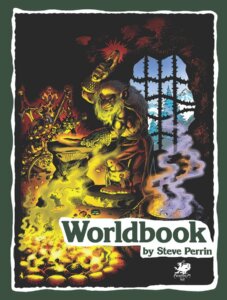 durability or the irreplaceable aura of authentic gaming history. While the anniversary set offers crisp, clean updates, there is an unparalleled, distinct magic to owning the actual artifact that rolled out of Chaosium’s warehouse over forty years ago.
For serious collectors and alternative RPG historians, nothing matches the prestige of placing a near-mint, original 1984 box set on your shelf. Holding the vintage, uncreased softcover booklets and seeing the legacy printing of Wendy Pini’s legendary artwork as it was originally experienced by the first generation of Wolfriders is a hobbyist’s dream.
Fortunately, Noble Knight Games specializes in keeping these rare, out-of-print legacy treasures alive. If you want to experience the exact physical history of tabletop gaming, tracking down the original vintage supplements and boxed sets provides an authentic connection to the past that no modern reprint can entirely replace.
What supplements and accessory support are included in the new edition?
The new Deluxe Boxed Set includes all of the original 1984 sourcebooks and separate legacy supplements, eliminating the need to hunt down rare, overpriced expansions on secondary markets if you prefer an all-in-one bundle. Chaosium has packaged the entire vintage ecosystem into a single, massive product, giving you hundreds of hours of gameplay right out of the box.
Inside this ultimate collection, players will find:
- The Elfbook & Worldbook: Fully restored core rules, character generation guidelines, setting guides for the World of Two Moons, and three classic starter scenarios to introduce your table to the setting.
- The ElfQuest Companion: 40 pages of additional background lore, custom characters from the comics, and three extra adventures to expand your campaign.
- The Sea Elves Supplement: A 48-page deep dive into the marine creatures, unique coastal cultures, and three specialized ocean scenarios featuring the distinct lifestyle of the waves.
- Elf War: A highly sought-after, rare 40-page booklet featuring two massive, interconnected campaign scenarios that pit the elves against massive threats.
- Accessories & Handouts: Eleven distinct character sheet templates for different tribes (from Wolfriders to Sun Folk), reference charts for the GM, a beautiful full-color world map, and a complete set of polyhedral dice. (What is a box set without dice? You can never have too many dice!)
Is Warp Graphics still active, and are there new ElfQuest books available?
Warp Graphics is thriving alongside creators Wendy and Richard Pini, who are currently overseeing a massive publishing renaissance handled by Dark Horse Comics. The legendary franchise is expanding its legacy media across multiple formats, ensuring that fans have plenty of material to read when they step away from the gaming table.
If you prefer physical media over digital streams, this is a golden age for collectors. Dark Horse is currently rolling out a gorgeous, newly remastered, full-color hardcover collection of ElfQuest: The Original Quest, which is split across four definitive volumes. Books 1 and 2 dropped in early 2025, with Book 3 (Wolf Blood Caged) landing in August 2025.
Dark Horse has also released the massive, 624-page Final Quest Omnibus to complete the overarching narrative. Beyond physical books, fans can even stream Season One of the star-studded, audio-designed ElfQuest Audio Movie for free, proving that the tribe isn’t just surviving—it is actively growing and finding new audiences in the modern era.
As an original fan, the announcement of this rerelease took me back to the day when I picked up issue #1 of the Original Quest. (Fantasy Quarterly #1 featuring the first appearance of ElfQuest is also an epic buy for any fan!) It wasn’t on the same shelves as the regular comics, mostly due to its magazine format, at a time when magazine format comic books were thought to be a bad idea. Savage Sword of Conan was not the only magazine that proved that belief wrong. ElfQuest went on to become one of the world’s first independent graphic novel imprints, and it is still revered today. It is really a good day to be an ElfQuest fan!


